


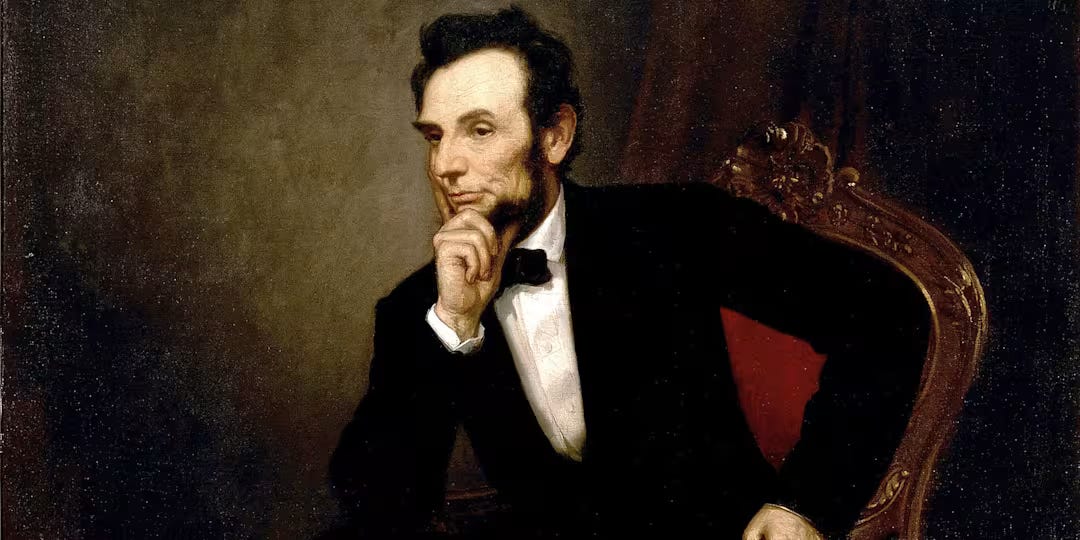
“Complaints against the ‘imperial presidency’ are back in vogue,” wrote Harvey Mansfield in 2007. They are so, again, in 2026—particularly under Trump 2.0. It is a perennial debate. However, in the criticisms for supposed abuses of presidential power, it is often ignored that the American republic was always intended to have a strong executive. During critical moments of U.S. history, such as the Civil War, the sweeping expansion of executive power, manifested in episodes such as Lincoln’s suspension of habues corpus and the unilateral emancipation proclamation, were necessary to ensure the future and security of the United States. A belief in a strong executive does not mean that one does not place high importance on the rule of law and the separation of powers. Antonin Scalia, a prominent proponent of the unitary executive theory and former Supreme Court Justice, placed the separation of powers and the Constitution’s structural elements “higher in importance than above its more well-known provisions protecting individual rights.” Only a purposive executive directed towards substantive ends safeguards itself as a constitutionally structural element.
Throughout American history, the executive has been understood as the branch entrusted with what Alexander called “energy” which is the capacity for “decision, activity, secrecy, and dispatch” that the legislature, by its very design as a deliberative body, cannot and should not supply. Hamilton’s defense of a single executive in Federalist No. 70 was explicit on this point when he said that plurality within the executive branch would tend to “conceal faults and destroy responsibility,” while unity secures both vigor and accountability at once. Article II of the U.S. Constitution is clear in itself: “The executive Power shall be vested in a President of the United States.” Advocates of a unitary executive emphasize that “the most important word in that sentence is the indefinite, singular article ‘a.’” This was not an incidental feature of the founding design but its deliberate correction of the enfeebled plural executives of the state constitutions and the Continental Congress.

