

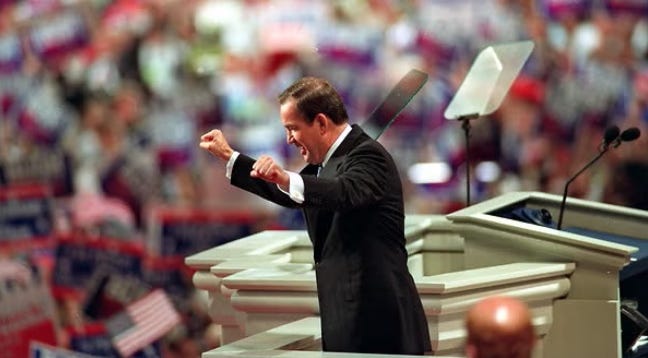
In 1996, Republican presidential candidate Pat Buchanan shot to an early lead in the presidential primary cycle, winning the first two contests, the Alaska and Louisiana caucuses, before finishing a close second to the GOP establishment’s anointed candidate, Senator Bob Dole, in Iowa. Running on a platform of economic nationalism, immigration security, social conservatism, and foreign policy restraint, Buchanan’s early victories and strong showing in Iowa gave his political movement momentum before heading into New Hampshire.
But as Buchanan threatened to derail the assumed front-runner’s coronation as the GOP nominee, the Dole campaign told Time that it would seek to “win it ugly” in the closing days of the New Hampshire race. And as promised, it became ugly. Dole’s campaign attempted to position the race as a choice between “the mainstream and the extreme.” Buchanan was accused of antisemitism by Republicans and faced accusations of racism, xenophobia, and intolerance. Instead of engaging in a principled debate over the issues or addressing the concerns of Buchanan and his supporters, Dole and much of the Republican establishment sought to make Buchanan persona non grata within the party. Buchanan nevertheless shocked the Republican establishment by winning the New Hampshire primary, narrowly defeating the presumed front-runner.
As the once-venerable Time noted, the growing “pile-on” aimed at Buchanan demonstrated that his campaign was being taken seriously.

